


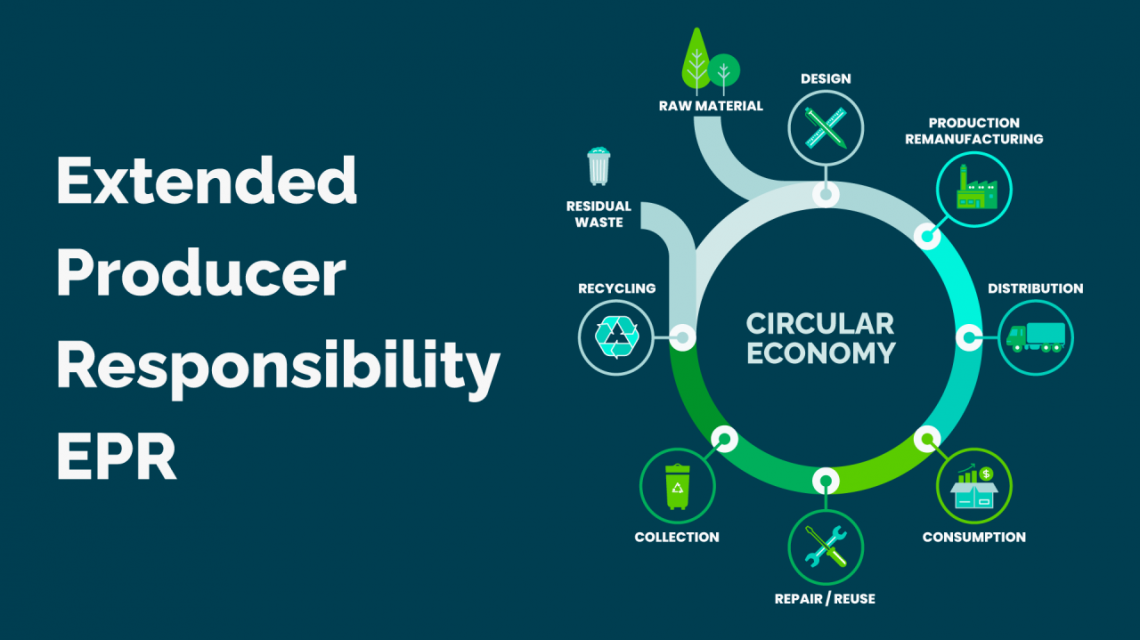
Extended Producer Responsibility, or EPR, has changed the way plastic manufacturers and businesses dealing with plastic packaging approach waste management in India. Plastic waste is no longer treated simply as something that leaves the factory or warehouse and becomes someone else’s responsibility. Under India’s regulatory framework, businesses can have defined obligations for what happens to plastic packaging after it enters the market.
For manufacturers, this means EPR compliance is increasingly connected to production decisions, packaging design, documentation, recycling arrangements and the ability to demonstrate that waste management obligations have actually been fulfilled.
The regulatory framework has also become considerably more structured. India’s Plastic Waste Management framework now covers different categories of plastic packaging, establishes recycling and recycled-content requirements, and uses a centralised online system to track obligated entities and compliance.
For a manufacturer, understanding EPR therefore requires looking beyond registration. The real question is how the company’s plastic footprint, recovery obligations, recycling partners and records fit together.
What EPR means for plastic manufacturers
Extended Producer Responsibility is based on a relatively straightforward principle: the organisation placing a product or packaging into the market retains responsibility for its environmentally sound management at the end of its useful life.
Under India’s plastic packaging EPR framework, the system covers producers, importers, brand owners and plastic waste processors. The rules distinguish between several packaging categories, including rigid plastic packaging, flexible plastic packaging and multilayered packaging. The framework also covers reuse, recycling, the use of recycled plastic content and end-of-life disposal.
The definition of a producer is particularly important for manufacturers. It can include businesses manufacturing or importing carry bags, multilayered packaging, plastic sheets and similar materials, as well as businesses using plastic sheets or multilayered packaging to package or wrap commodities.
This means a company cannot assume that EPR is relevant only to large consumer brands. Its applicability depends on what the business manufactures, imports, uses or places on the market.
The regulatory framework is built around measurable obligations
One of the biggest changes brought by the EPR framework is that compliance is no longer simply about demonstrating that some plastic waste was collected.
The Central Pollution Control Board’s framework establishes category-specific targets. For example, the overall EPR target for plastic packaging reached 100% from 2023-24 onward, while minimum recycling requirements are being increased progressively.
For Category I rigid plastic packaging, the minimum recycling requirement is 50% of the applicable EPR target for 2024-25, increasing to 60% in 2025-26, 70% in 2026-27 and 80% from 2027-28 onward. For Category II and Category III packaging, the corresponding requirement moves from 30% to 40%, 50% and eventually 60%.
These figures matter because they show where the regulatory direction is heading. Compliance is increasingly tied to actual recovery and recycling outcomes rather than simply participation in a waste-management programme.
The CPCB’s plastic waste EPR framework provides the regulatory basis for these obligations and should be treated as the primary reference when determining current requirements.
Registration is only the starting point
A manufacturer that falls within the applicable categories needs to understand its registration requirements on the centralised EPR portal. The framework requires covered entities to register through the online system, with different registration arrangements depending on the type of entity and its operational footprint.
But registration by itself does not equal compliance.
Once registered, a company needs reliable information about the quantity and category of plastic packaging it introduces into the market. That information forms the basis for calculating obligations and preparing the relevant action plan.
This is where many businesses can run into practical difficulties. Production records, packaging specifications, procurement data, sales information and waste-recovery records may exist in different departments or systems. If these figures are not reconciled, even a company that is actively managing its waste can struggle to produce a clean compliance trail.
A more effective approach is to treat EPR data as part of the company’s operational reporting rather than as a document prepared only when a filing deadline approaches.
Understanding the four plastic packaging categories
The EPR framework divides plastic packaging into four main categories.
Category I covers rigid plastic packaging.
Category II includes flexible plastic packaging made from single or multiple layers of plastic, as well as plastic sheets, covers, carry bags, sachets and pouches.
Category III covers multilayered plastic packaging where at least one layer is plastic and another layer is made from a different material.
Category IV covers plastic sheets or similar material used for packaging and carry bags and commodities made from compostable plastics. Subsequent amendments have also introduced provisions covering biodegradable plastics.
The distinction is not merely administrative. Different categories can have different recycling, reuse and recycled-content obligations. A manufacturer therefore needs to classify its packaging correctly before calculating its EPR position.
For businesses handling several packaging formats, maintaining a category-wise inventory can make compliance considerably easier.
Recycled content is becoming a production issue
EPR is also moving upstream.
Instead of focusing exclusively on what happens after packaging becomes waste, the framework increasingly connects compliance with the material used to manufacture new packaging.
This means manufacturers may need to consider the availability and suitability of recycled plastic as part of their procurement and production decisions. For some packaging applications, recycled-content requirements can affect material sourcing, product specifications and supplier relationships.
That creates an interesting shift in responsibility. A sustainability team may own the EPR filing, but manufacturing and procurement teams can influence whether the company is capable of meeting the underlying requirements.
For plastic manufacturers, this makes material traceability increasingly valuable. Knowing where recycled material came from, what specification it meets and how much enters production can become just as important as knowing how much plastic waste leaves the factory.
EPR requires a traceable waste chain
A manufacturer should be able to answer a fairly simple question: what happened to the plastic waste associated with its obligations?
That answer becomes difficult when waste passes through several intermediaries.
Collection may happen through aggregators, waste-management companies or informal-sector workers. Material may then move to sorting facilities and recyclers before being converted into another material or product. Without adequate documentation, the manufacturer can end up with a gap between the quantity it claims to have recovered and evidence showing what actually happened to the material.
This is why traceability has become such an important part of India’s EPR ecosystem.
One example is ReCircle’s approach to plastic EPR and waste recovery, which combines collection networks with digital tracking, verification and reporting. Its model illustrates how waste recovery can be structured as a traceable supply chain rather than treated as a simple collection transaction.
The lesson for manufacturers is not that every company needs the same technology. It is that the evidence supporting an EPR claim needs to follow the material through the relevant stages of recovery and processing.
Digital systems are changing how compliance is managed
The growth of digital waste-management platforms is another consequence of increasingly detailed EPR requirements.
A manufacturer may need to manage registration information, packaging quantities, category classifications, recovery targets, recycler relationships, certificates and annual reporting. Managing all of this through spreadsheets and disconnected email records becomes increasingly difficult as the volume of transactions grows.
Digital platforms can bring these activities together and provide a more structured record of the compliance process.
Recykal’s digital EPR and waste-management platform is an example of this model. Its system connects brands and waste-management participants and provides tools for EPR planning, recycler onboarding, traceability and compliance reporting.
For manufacturers evaluating technology or external service providers, the important question is not simply whether a platform offers “EPR management.” The more useful questions are whether it can provide reliable transaction records, identify authorised recycling partners, maintain traceability and produce documentation that can withstand scrutiny.
The cost of non-compliance can extend beyond the filing cycle
EPR shortfalls can have financial consequences.
CPCB’s environmental compensation framework provides for compensation where obligated entities fail to meet specified EPR requirements. For certain shortfalls, the framework provides an initial rate of ₹5,000 per tonne, increasing to ₹10,000 per tonne for a second instance and ₹20,000 per tonne for a third instance, subject to the applicable provisions and calculation methodology.
The framework also allows certain shortfalls to be carried forward for up to three years under specified conditions.
This changes the business calculation. EPR should not be viewed as a compliance expense that can simply be addressed at the end of the financial year. Poor data, weak recovery arrangements or incorrect packaging classification can eventually translate into additional costs and operational disruption.
There is also a reputational dimension. Companies increasingly make claims around recycled content, plastic neutrality, circularity and responsible sourcing. If the underlying recovery data cannot be substantiated, those claims can become difficult to defend.
What manufacturers should prepare internally
A practical EPR system starts with accurate information.
Manufacturers should first establish exactly which plastic packaging they manufacture, import or use, and then map those materials to the applicable EPR categories. Production and packaging quantities should be reconciled with procurement and sales data so that the underlying numbers are consistent.
The next step is to understand the company’s annual obligation and how it will be fulfilled. That could involve internal waste recovery, authorised recyclers, collection partners or specialised EPR service providers.
Documentation deserves equal attention. Contracts, invoices, collection records, recycler information, processing evidence and EPR certificates should not be treated as separate paperwork. Together, they form the audit trail supporting the company’s compliance position.
It is also worth assigning clear ownership. EPR can sit between sustainability, regulatory affairs, procurement, operations and finance. Without one person or team responsible for bringing those inputs together, small inconsistencies can become significant problems at the time of filing.
EPR should influence packaging decisions earlier
The most effective compliance strategy may begin before a package reaches the market.
Packaging design affects recyclability. Material combinations affect recovery options. Excessive use of virgin plastic can increase exposure to recycled-content requirements. Difficult-to-recycle formats can create more complicated end-of-life pathways.
The EPR framework itself encourages packaging design that supports reuse and recycling, alongside the use of recycled plastic content and environmentally responsible packaging design.
For manufacturers, this creates an opportunity to connect regulatory compliance with product development.
Instead of asking only, “How will we fulfil this year’s EPR target?”, businesses can ask, “Can we design this packaging so that the target is easier to meet in the first place?”
That is a much more strategic approach.
Building a practical EPR compliance process
A manufacturer does not necessarily need an elaborate system from day one. A well-structured process can begin with five basic questions.
What plastic packaging are we putting into the market?
Which EPR category does each format belong to?
What quantity does that represent?
How will the corresponding obligation be fulfilled?
What evidence proves that the recovery, recycling or other required activity actually occurred?
The answers should be supported by consistent records rather than estimates created retrospectively.
For larger manufacturers, this can eventually become an integrated data workflow connecting production systems, packaging procurement, inventory, sales and waste-management records. For smaller businesses, a controlled reporting process and carefully selected compliance partner may be sufficient.
The important point is that the process should be designed around evidence.
Moving from compliance to circularity
EPR is often discussed as a regulatory burden, but it also creates a commercial incentive to rethink how plastic moves through the economy.
India’s Ministry of Environment, Forest and Climate Change reported that around 3.3 million tonnes of plastic packaging were covered under EPR for 2022-23, with more than 36,000 registered Producers, Importers and Brand Owners and more than 2,350 registered Plastic Waste Processors by December 2023. The scale of the system shows that EPR has moved well beyond a niche environmental initiative.
For manufacturers, the next stage is likely to involve greater emphasis on traceability, recycled material, packaging design and measurable recovery outcomes.
That makes EPR more than an annual compliance exercise. It is becoming part of how plastic products are designed, manufactured, sold and eventually recovered.
Companies that build reliable systems around those requirements will be better positioned not only to meet today’s obligations, but also to respond as India’s circular economy framework continues to evolve.